

News & Insights
News
Insights
Recent Posts
- Consider an Installment Sale to Optimize Taxes When Selling Your Business
- 5 Year-End Tax Planning Strategies for Businesses
- 5 Tax-Smart Ways to Take Cash Out of Your C Corporation
- New Law Extends Tax Relief for Disaster-Related Personal Casualty Losses and More
- When One Revenue Source Carries Too Much of the Mission
- Trump Accounts Are Here: What Families and Employers Should Know
- Watch Out for the Growing Reach of the Additional 3.8% Tax on Investment Income
- How to Avoid and Correct Common Payroll Tax Mistakes

GASB 101 Calculation: Understanding Inflows, Outflows, and Compensated Absences


GASB Statement No. 101, Compensated Absences, requires that liabilities for compensated absences be recognized for (1) leave that has not been used, and (2) leave that has been used but not yet paid in cash or settled through noncash means.
A liability should be recognized for leave that has not been used if (a) the leave is attributable to services already rendered, (b) the leave accumulates, and (c) the leave is more likely than not to be used for time off or otherwise paid in cash or settled through noncash means. This Statement also establishes guidance for measuring a liability for leave that has not been used, generally using an employee’s pay rate as of the date of the financial statements.
A key distinction from previous guidance is the shift from ‘termination payments,’ particularly evident in the treatment of sick leave accounting under GASB 101, which aligns sick leave calculations with other compensated absences rather than providing separate options for accounting, as seen in GASB 16.
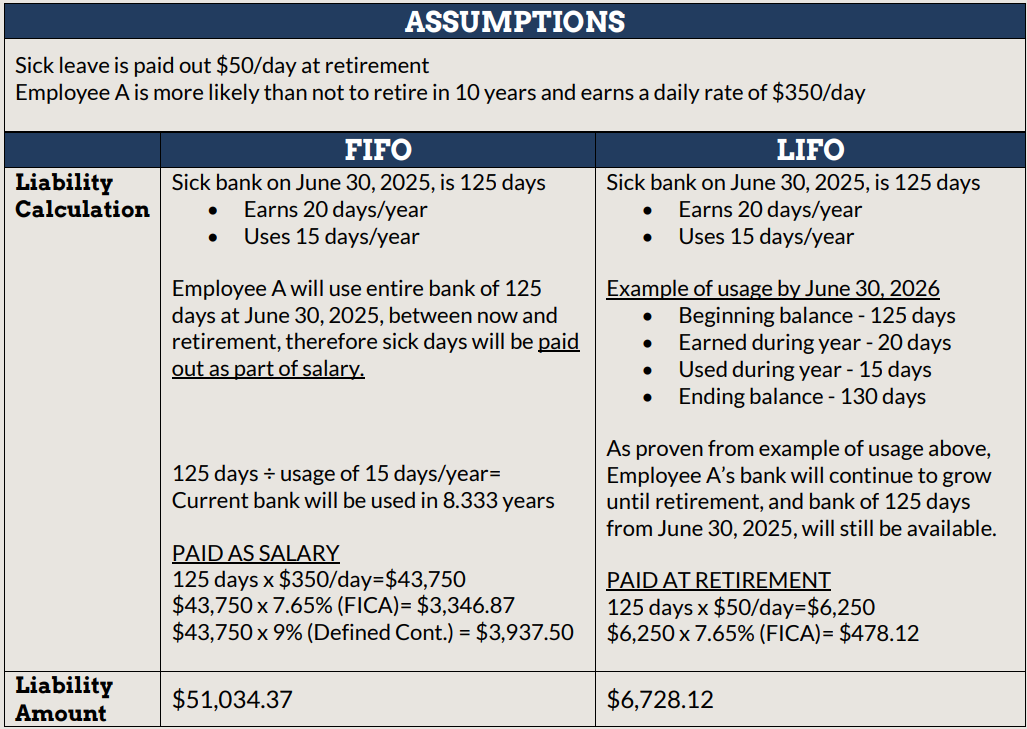
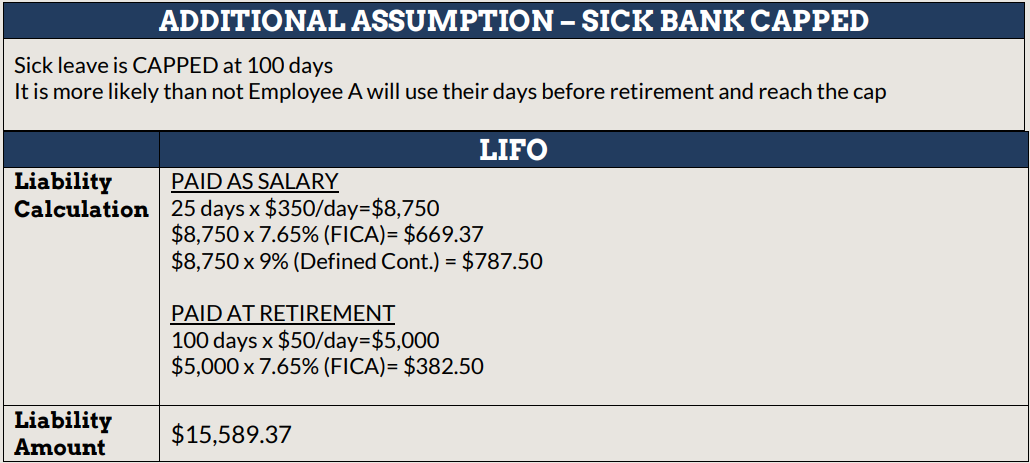
A key component in determining the estimate of the amount due within one year is the flows assumption for the pattern of usage of compensated absences. The flows assumption, whether implicit or explicit, is used in determining whether the amount the district expects to pay in the next reporting period will be attributed first to (a) the recognized liability at the date of the financial statements (a first-in, first-out [FIFO] flows assumption) or (b) the leave earned in the next reporting period (a last-in, first-out [LIFO] flows assumption).
For more questions about GASB 101, contact the education audit experts at maner@manercpa.com or give us a call at 517.323.7500.
For more questions about GASB 101, contact the education audit experts at maner@manercpa.com or give us a call at 517.323.7500.
The materials provided in the News & Insights section are for general informational purposes only and may not reflect the most current legal, tax, or financial developments. While we strive to ensure accuracy at the time of publication, Maner Costerisan does not guarantee that the information remains up-to-date or free from error. We recommend consulting directly with a Maner Costerisan team member to confirm the applicability and relevance of any information to your specific situation.