

News & Insights
News
Insights
Recent Posts
- Restricted Stock Deserves Attention Before Year End
- Understanding Deferred Taxes: Why Book Income and Taxable Income Don’t Always Match
- Repair or Improvement: Does the Distinction Matter Under Current Tax Law?
- Restructure Your Nonprofit with Confidence
- Which Products Really Drive Your Business’s Profits?
- IRS Releases Guidance on the Paid Family and Medical Leave Tax Credit
- Plan Before Expanding Your Nonprofit’s Staff
- The Business Lifecycle Part 5: The Expansion Stage

The Fiduciary Role in Local Government: Leading with Intention



In local government, leadership isn’t just about setting agendas or passing budgets. It’s about making decisions that protect public resources and move the organization forward. That’s the heart of fiduciary duty.
Whether you serve on a city council, village board, county commission, or authority board, your role as a fiduciary is an active one. It requires discipline, strategic thinking, and a clear commitment to the public good.
What It Means to Be a Fiduciary
A fiduciary is someone legally and ethically obligated to act in the best interest of others. In local government, this duty applies every time you vote on a policy, allocate resources, or approve a contract. It means setting aside personal preferences and political pressure and focusing instead on what’s best for the people you serve. This responsibility extends beyond just finances. It includes strategic planning, internal controls, policy development, appointments, audits, and investment decisions. It requires transparency, sound judgment, and meticulous documentation. Every action you take should build trust, promote accountability, and reflect your community’s goals.How Fiduciary Duty Shows Up in Practice
Fiduciary duty isn’t abstract. It’s visible in how you lead.1. Duty of Care
It starts with the duty of care. Board members must stay informed, read the materials, ask hard questions, and participate fully in meetings. This isn’t a ceremonial role. It requires curiosity, engagement, and the discipline to challenge assumptions. The public expects thoughtful judgment based on solid data, not rubber-stamped decisions.2. Conflict of Interest
Next, there’s conflict of interest. Public trust depends on transparency. If you have a personal or financial interest in a matter, disclose it early and clearly. Even the appearance of bias can erode confidence in the board’s decisions. Leadership means stepping aside when necessary and always prioritizing the public’s interest.3. Duty to Vote
The duty to vote is just as essential. You were elected or appointed to make decisions. Avoiding hard votes or remaining silent sends the wrong message. Oversight means taking a stand—even when it’s not easy.4. Fiscal Responsibility
Fiscal responsibility goes beyond balancing a budget. Every decision the board makes today affects the township’s long-term financial health. It means protecting public dollars from waste and investing in what truly matters. That includes aligning spending with the strategic plan, supporting essential services, maintaining infrastructure, and driving transformational changes that strengthen the township. Responsible boards focus on sustainable choices that deliver long-term value. Spending should always support the future, not just patch today’s problems.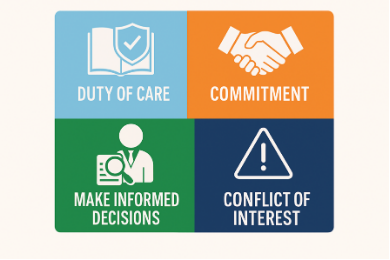
Fiduciary Leadership in Action
Fiduciary leadership shows up in four key ways:1. Engagement
Listen to staff, residents, and subject matter experts. You don’t have to be the expert in everything, but you do need to seek out the right voices and perspectives.2. Oversight
You’re not managing day-to-day operations, but you are responsible for making sure things are running as they should. Ask questions, review reports, and hold your organization accountable.3. Direction
Boards and councils set vision and priorities. Without clear direction, your government becomes reactive. Budgeting, staffing, and planning drift without a sense of purpose.4. Resource Stewardship
Your responsibility includes more than money. It extends to people, equipment, time, and organizational focus. Your job is to make sure the government has what it needs to succeed.Why It Matters
Local government is where people experience democracy closest to home. When elected and appointed officials take their fiduciary role seriously, the result is clear. Trust grows. Services improve. The organization becomes stronger and more resilient. Fiduciary duty is not about micromanaging. It’s about leading with intention, asking good questions, and staying focused on the long-term health of the community. That’s how good boards become great ones.Learn More About Your Fiduciary Role with Maner Costerisan
If you want to learn more about what it means to be a responsible fiduciary for your local government, we can help. Maner’s government consulting team can work with you to develop a better sense of responsibility and accountability with your fiduciary role. Contact us today at maner@manercpa.com for more information.The materials provided in the News & Insights section are for general informational purposes only and may not reflect the most current legal, tax, or financial developments. While we strive to ensure accuracy at the time of publication, Maner Costerisan does not guarantee that the information remains up-to-date or free from error. We recommend consulting directly with a Maner Costerisan team member to confirm the applicability and relevance of any information to your specific situation.